
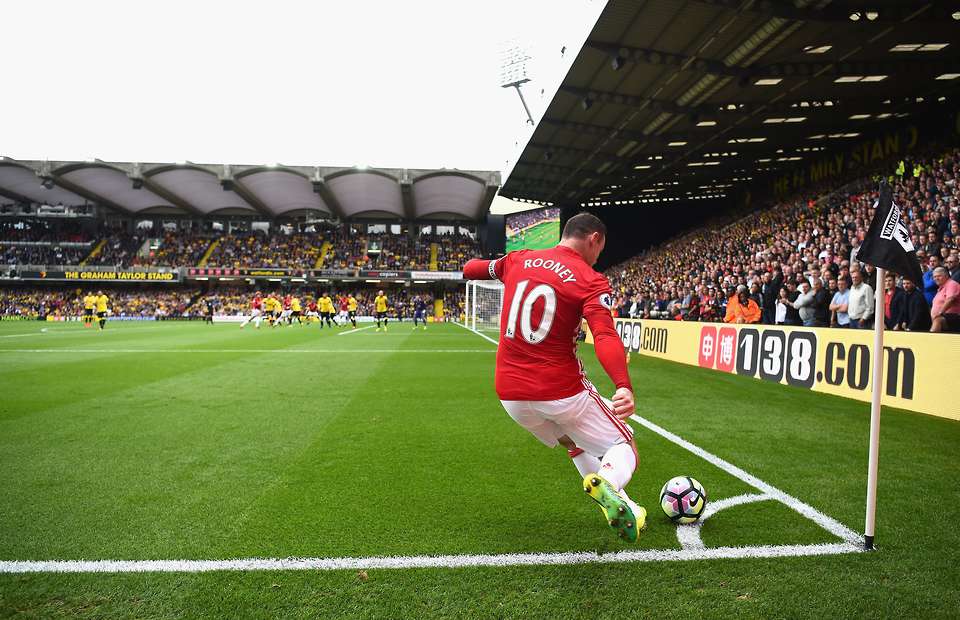

The 2018/2019 football season provided clear statistical divisions between teams generating frequent corners and those systematically suppressing them. Beyond surface data, corner patterns reveal team structure—width utilization, pressing depth, and game control phases. Understanding these tactical nuances allows bettors to align corner markets with predictable playing behavior rather than perceived form.
Why Corner Volume is a Tactical Signature
Corners rarely occur by chance; they are by-products of attacking intent and defensive posture. Clubs consistently delivering high corner counts typically operate from wide areas, delivering frequent crosses or sustained possession near the penalty zone. Conversely, teams designed around counterattacks or central transitions generate fewer opportunities for either side to earn corners.
This structural variance stabilizes over long sample sizes, making corner totals one of the most reliable statistical extensions of tactical habit rather than luck-driven outcomes.
Key Structural Drivers of High vs. Low Corner Totals
For a precise reading, one must examine both team intent and match control ratio. A club’s share of field territory—defined through cumulative third entries—predicts their corner frequency more accurately than overall possession.
Conditional Mechanisms Behind Corner Frequency
- High-press sides push numerical advantage wide, producing numerous blocked crosses.
- Teams defending in deep compact lines reduce corner totals overall.
- Shot-heavy systems correlated directly with “over” corner results, while vertical passing sides skew “under.”
Categorizing 2018/2019 Teams by Corner Dynamics
Certain patterns were particularly consistent during that season. For instance, Manchester City, Napoli, and Bayern Munich dominated high-corner statistical zones due to extreme ball retention and wing rotations. In contrast, teams like Getafe and Burnley, prioritizing low-block defending and direct clearance countering, persistently landed under totals regardless of result outcome.
A simplified table captures the distinction:
| Tactical Style | Example Teams (2018/19) | Corner Outcome Bias |
| Wide attacking/possession-based | Man City, Bayern, Napoli | Over corners |
| Compact counter-defensive | Getafe, Burnley, Torino | Under corners |
| Transitional pressing hybrid | Spurs, Leipzig | Volatile, context-dependent |
Interpreting this table extends beyond name recognition; it illustrates how playing geography defines recurring statistical outcomes across competitions.
Reading Corner Markets from a Data-Driven Lens
Evaluating corner volume requires integrating several contextual variables rather than treating it as simple count forecasting. Historical data loses value without current-season rhythm updates—managerial shifts or formation rewrites can reverse trends rapidly. Bettors thus monitor week-to-week volatility in attacking width, player overlap positions, and recent averages across five-match spans.
Consistent “over” or “under” value arises when bookmaker lines lag behind systemic tactical continuity.
Applying Model-Based Observation Through UFABET
When attempting to operationalize these insights, having access to match-level visualization tools can refine execution. Within this analytical scope, ufa168 แจกเครดิตฟรี served as a practical web-based service where corner line fluctuations were easily compared across multiple competitions. Observers utilizing its real-time correlation between odds shifts and match phase analytics often identified inefficiencies ahead of pricing adjustment. The real takeaway lies not in brand distinction but in how a structured analytical environment supports disciplined decision-making rooted in repeated corner trends.
Defensive Shape’s Influence on Opponent Corners
Corner totals also depend on how a team defends spatially. Clubs maintaining central compactness, forcing opponents wide under pressure, concede more corners despite defensive solidity. Meanwhile, high-block teams allowing narrow counterplays tend to face fewer defensive corners. Understanding that correlation prevents misreading defensive quality as low-corner consistency.
Cross-League Corner Volatility and casino online Observations
When reviewing aggregated market data across several European leagues during that campaign, volatility clustered heavily around high-possession environments. Within a broader evaluative framework, casino online data archives highlighted how pivot shifts in public betting attention caused reactive pricing swings on total-corner markets. Viewing those dynamics inside an advanced betting destination context demonstrated how overvalued totals often emerge immediately after a team’s high-corner streak, providing contrarian entry potential once statistical regression returns.
Failure Conditions and Misinterpretation
Despite apparent data clarity, over/under corner edges fail when external factors override tactical consistency—poor pitch quality, heavy rain, or early red cards distort attacking geometry. Similarly, vastly unequal fixtures see one side dominate territory yet produce reduced corner events when early goals suppress attacking intent.
Summary
The 2018/2019 season reinforced that corners are not random artifacts but tactical signatures quantifiable through attacking geometry and defensive configuration. Teams rooted in sustained possession and wide buildup predictably produced overs, while deep defenders created recurring unders. The sustainable path for bettors lies in linking game phase structure to momentum patterns—measuring efficiency of territorial control rather than relying on score-based emotions. Strategic corner betting thrives on logic, rhythm, and verified pattern recognition.